ArcadeCab
Cabinet Plans 2: Tools
Table of contents
- Background
- Tools
- Materials
- Cutting Side One
- Cutting Side Two
- Dado for the Base
- Building the Base
- Monitor Shelf
- Ledger Boards
- Speaker Area- Start
- Upper rear
- Back
- Top
- Drawer
- Door
- Speaker Area- Cuts
- Painting
- Assembly
- Marquee
- Monitor Bezel
- List of Boards
- Control Panel Part 1
- Control Panel Part 2
- Wiring the CP
- Attaching the CP
- Finishing Touches
- Software
- Final Thoughts

Tools
The tools that are shown
throughout this document are: circular saw, jigsaw, table saw, drill(s),
router, clamps, saw horses, tape measure, and pencil. You can get
by without the table saw but it is nice to have.
I used 1" and 1-1/4" course drywall screws exclusively on this project. The holding power is excellent.
Be careful with the tools and take the time to understand how they function. If you are new to a tool, test it out on scrap wood before moving to your cabinet. Remember that you'll need all your fingers to play the games when the cabinet is complete.
Below are a few pictures of the key tools.
|
|
The circular saw. If you don't have access to a table saw, this will serve you almost as well. I have a plywood cutting blade in it, which does a very nice job with my cuts. This blade will also cut laminate. |
|
|
|
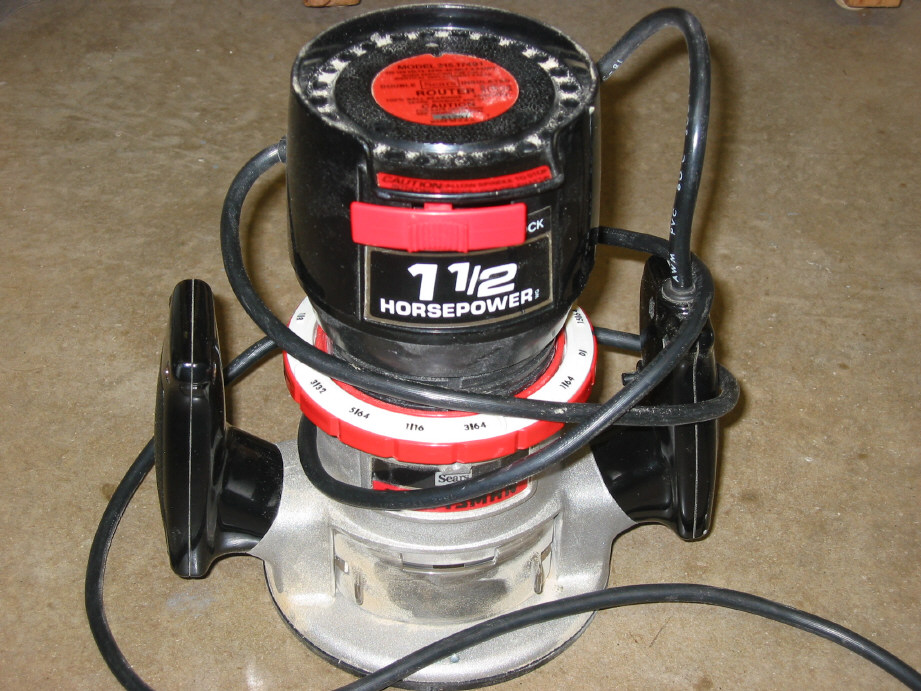
The router. I cannot say enough good things about it- it is a critical tool for me. This beauty is over 30 years old (thanks Dad) and still works perfectly, handling everything I throw at it. |
|
|
|
Corded drill. Even if you have a nice cordless drill, I would really recommend having even a low-end corded drill. You don't want to run a battery dry at an inopportune time, and you will occasionally need the extra torque. |
|
|
|
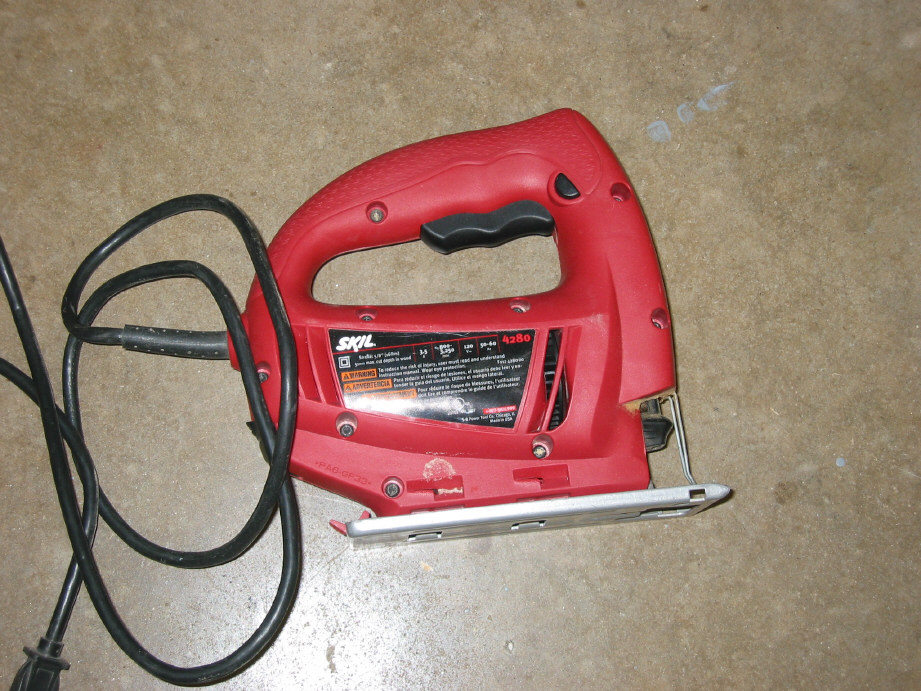
The jig saw. It is handy for cutting the first side. Run it against a straight edge and the resultant cut is nearly impossible to discern (by sight) from a circular saw cut. The downside is it takes a lot longer to cut with than the other saws. |
|
|
|
The main router bits I use are the slotter cutter (far left), the flush cutter (second), and the 3/4" straight bit (third from left). You can tell the bits have seen some use. The next bit is the combo-drill bit/countersink which saves me time. 3/8" spade bit is second from the right, and, lastly, the 1-1/8" spade bit (for the control panel). The parts you need for the slotter are 6700A and A200B from this page, and part #2400 from this page. |
|
|
|
Saw horses. I have four on-hand and use them constantly. I have found the cheapo ones work just as good as the higher priced ones for the application we need them for. I just would not recommend expecting them to hold your body weight in addition to the board weight for any length of time. In other words, no napping on construction days. |
|
|
|
I love these small, quick-release clamps. I own two and they are used all the time. You should invest in at least a set. They are expensive but worth every penny. |
|
 |
These are the two clamps I use to hold the cabinet sides together during test fittings. They are 24" long. |
|
 |
This is a combination drill bit and countersink. It is a huge timesaver. |
|
|
|
The cabinet is held together primarily with 1" and 1-1/4" course drywall screws. They are quite strong (never had a head break off like with other screws), have a nice flat head, and have a fantastic grip. A pound of each will be plenty. |
|
|
|
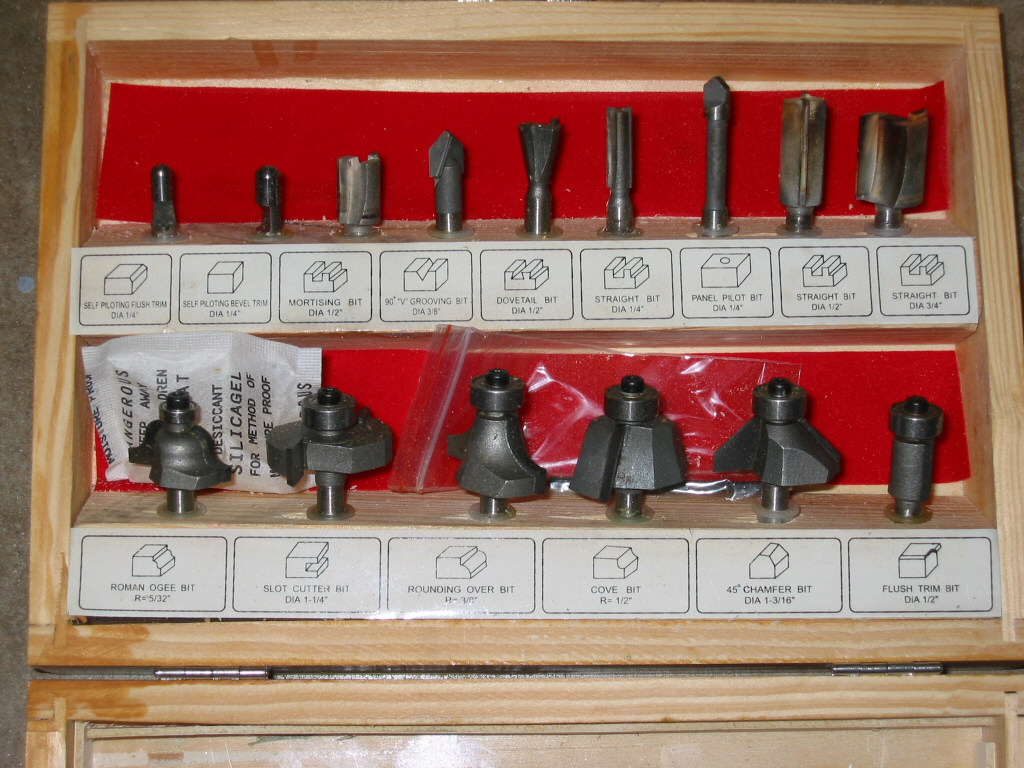
Just for informational purposes, I've included this shot of some common router bits. This is a set I purchased from a traveling tool sales tent that visits our city annually for about $10. The 3/4" (and 1/2") straight bit(s) I use are from this set and have more than paid for entire set. |




I might mention additional tools later in the text but these are the key
tools that will get you far in the project. If you don't want to
purchase them, see if you can find a friend (or co-worker) to borrow
from. I've had emails of persons who have done just that, and the
co-worker has ended up becoming interested in MAME as a result.
Great stuff!